


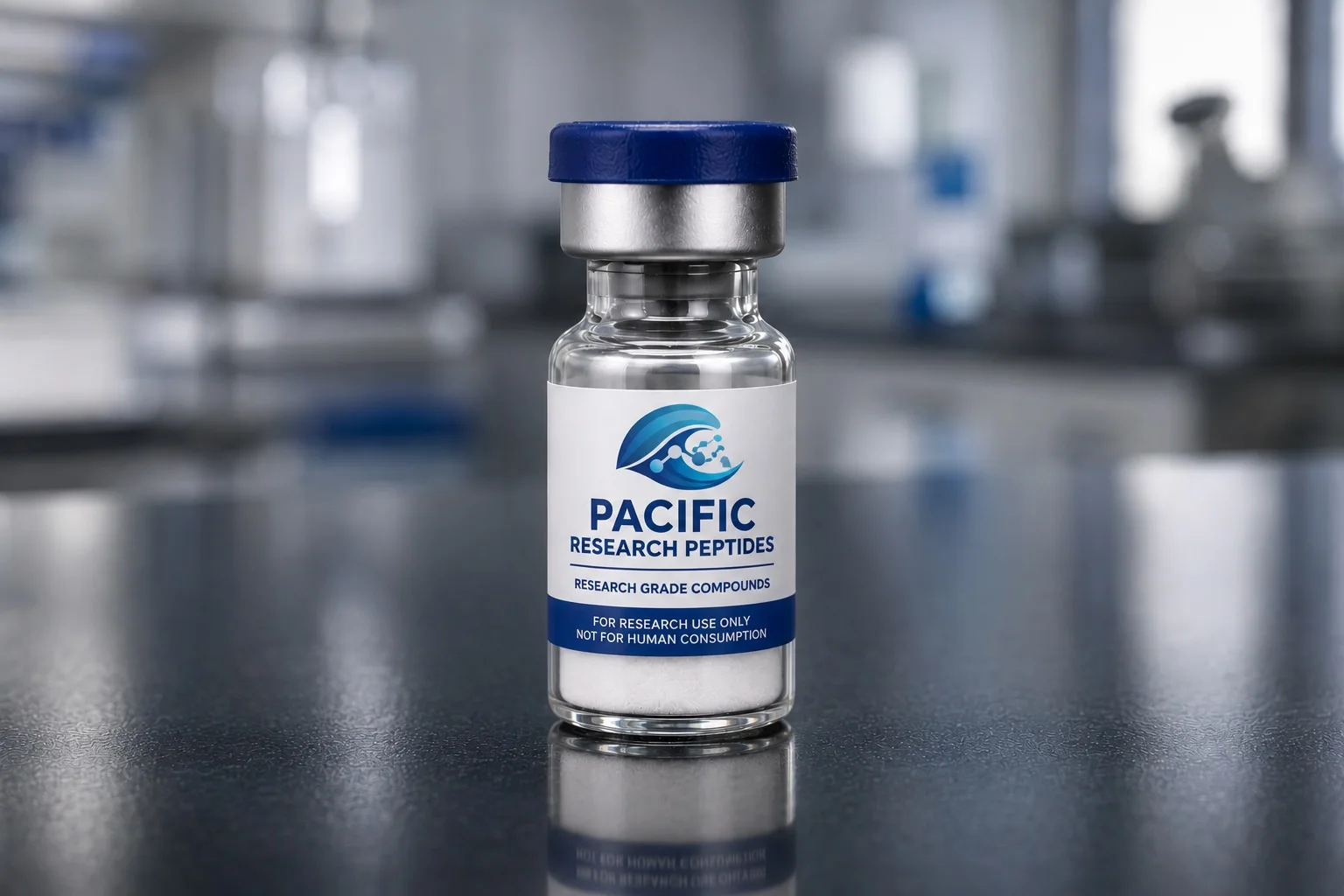
- 10 mg single vial
- Tracked U.S. fulfillment
- Research use only
BPC-157
Laboratory research procurement
BPC-157 research procurement
Pacific Research Peptides supplies BPC-157 research peptide vials strictly for qualified laboratory research. Review current availability, selectable vial strengths, quantity pricing, U.S. fulfillment and documentation status before ordering.
Price before account discounts$49.00Standard VIP · 5% off $46.55Sign in for your eligible price. First-order or WIRED offers apply instead when eligible; offers do not stack.



 PayG Pay
Up to $250 savings. Standard VIP: 5% ongoing. WIRED members: 15% ongoing. Sign in to apply your eligible offer; offers do not stack.
Certificate of Analysis history
Laboratory report history
BPC-157 10mg
- Catalog SKU
- BC10
- Batch
- 3
- Laboratory task
- 113525
- Sample received
- March 16, 2026
Match the catalog SKU, batch, and task number before relying on this report for research documentation · exact variation ID 7231.
What is BPC-157?
BPC-157 is a synthetic 15-residue peptide investigated in model-dependent laboratory literature. No single molecular target should be treated as established without assay-specific evidence and appropriate controls.
- Classification
- synthetic peptide research material
- Format
- Multiple lyophilized powder vial sizes may be available
- Documentation
- Review current COA records
Research use only. Not for human or animal consumption. Catalog classification does not establish identity, suitability, safety, efficacy, or an experimental outcome.
Research overview
Product Overview
BPC-157 is a synthetic 15-residue peptide investigated in model-dependent laboratory literature. No single molecular target should be treated as established without assay-specific evidence and appropriate controls.
What Is This Compound?
BPC-157 is classified in this catalog as a synthetic peptide research material. Its identity should be evaluated from the label, batch documentation, analytical method, and relevant primary literature rather than from consumer-use descriptions.
Research Classification
Synthetic peptide research material. Catalog category: Tissue & Cellular Signaling.
Molecular and scientific context
Mechanism Overview
BPC-157 is a synthetic 15-residue peptide. Published experimental work has examined nitric-oxide signaling, focal-adhesion signaling, growth-factor-associated pathways, and cytoskeletal responses; the literature does not establish one universally accepted molecular target.
Scientific Background
Names and identifiers used in scientific records may include: BPC-157; Body Protection Compound 157.
Literature review for BPC-157 should distinguish the exact molecular entity from related compounds and should record the experimental model, concentration, controls, endpoints, and analytical method.
Chemical Characteristics
Synthetic 15-amino-acid peptide. Sequence identity, terminal form, counterion, water content, and measured mass should be confirmed from batch-specific analytical records.
Research applications and interests
Research Applications
Laboratory work involving BPC-157 may include analytical identity testing, purity assessment, method development, stability evaluation, and controlled mechanistic investigation relevant to its research classification.
Research Interests
- Peptide identity and sequence assessment
- Analytical method development
- Model-dependent signaling research
- Batch-documentation comparison
Research Notes
- Define the exact molecular entity or blend components before selecting literature.
- Confirm the selected format before procurement and analytical planning.
- Match every analytical report to the exact product and batch identifier.
Research specifications
Research Specifications
| Catalog compound | BPC-157 |
|---|---|
| Verified synonyms | BPC-157; Body Protection Compound 157 |
| Research classification | synthetic peptide research material |
| Catalog format | Multiple lyophilized powder vial sizes may be available |
| Catalog category | Tissue & Cellular Signaling |
Catalog-level record. Match any lot-specific identity, reported purity, test date, and analytical result to the corresponding COA before relying on it.
Quality control and documentation
Quality Control
A defensible quality review for BPC-157 should separate identity from purity and should verify that every report maps to the received batch. Depending on the material, useful methods may include mass spectrometry, chromatographic purity analysis, water or solvent testing, and other fit-for-purpose assays.
Certificate of Analysis
Review the COA library before ordering and again after receipt. Match the product name, stated amount, batch or lot identifier, laboratory, analytical method, result, and test date. The absence of a matching report should not be interpreted as independent verification.
Batch Verification Checklist
- Product identity and supplied form match the label.
- Batch or lot identifier matches the received vial.
- Analytical method is appropriate for the reported result.
- Report date, laboratory identity, and document integrity are clear.
- Purity, identity, and quantity are treated as separate measurements.
Related research and scientific resources
Related Compounds
Documentation and Category Resources
- Browse this product category
- COA & Lab Reports
- How to Read a COA
- Research Education
- Tissue and cellular signaling research guide
Suggested Glossary Links
External Scientific References
Frequently asked questions
What is BPC-157?
BPC-157 is cataloged as a synthetic peptide research material. The listing is intended for laboratory identification, analytical planning, and controlled research workflows only.
What documentation should be reviewed for BPC-157?
Review the current product label and any matching Certificate of Analysis. Confirm the product name, stated amount, batch or lot identifier, test method, laboratory, and report date.
How should BPC-157 be handled?
Use qualified laboratory personnel, an approved protocol, calibrated equipment, and the storage conditions on the current label or batch documentation. This catalog does not provide personal-use or administration instructions.
Is BPC-157 supplied for research use only?
Yes. It is supplied strictly for laboratory research and analytical workflows and is not intended for human or animal consumption.
Where can I find scientific literature about BPC-157?
Use primary scientific databases such as PubMed and PubChem, and verify that the identity, form, and experimental model in a publication match the material under review.
Research Use Only. Supplied strictly for laboratory research and analytical workflows. Not for human or animal consumption.
Related products
 10mg
10mgSemax
$44.00Ongoing VIP price · 5% off $41.80Free account required. First-order and other eligible offers are calculated separately at checkout.
Add to cartNAD
In-stock and special-order sizes. Select a size to see its dispatch estimate.
Price range: $64.00 through $99.00Ongoing VIP price · 5% off $60.80–$94.05Free account required. First-order and other eligible offers are calculated separately at checkout.
Choose strengthKLOW
$109.00Ongoing VIP price · 5% off $103.55Free account required. First-order and other eligible offers are calculated separately at checkout.
Add to cartBPC-157 + TB-500 (Wolverine Blend)
$99.00Ongoing VIP price · 5% off $94.05Free account required. First-order and other eligible offers are calculated separately at checkout.
Add to cart