


Pacific Research Peptides
How To Read A COA
A practical guide to matching a laboratory report to the compound, strength, batch, date, method, and laboratory shown on a product record.
How to read a peptide COA
A COA should be read as a scoped analytical record for a specific sample, method, and reporting context. Verify the product, strength, batch, and dates first, then evaluate each reported result only for what that method states.
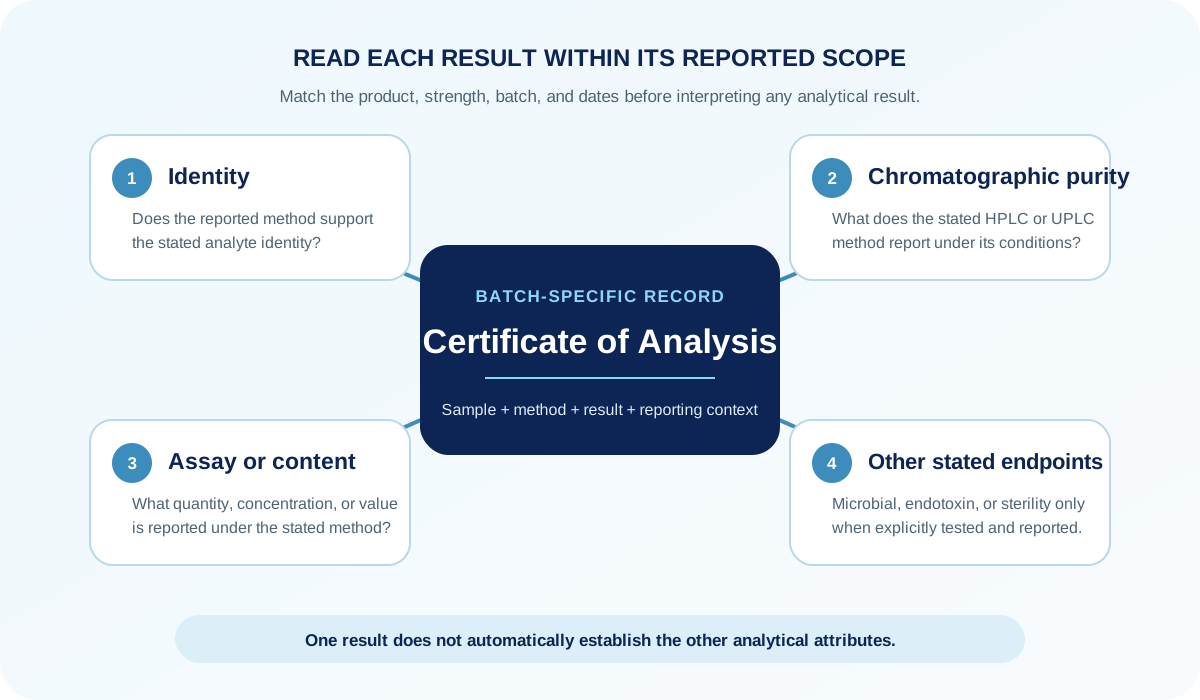
Match and scope the record
A COA is a batch document. It should be matched, scoped, and read as written—not treated as a general endorsement of every product with the same name.
Compound and strength
Confirm the reported analyte and strength correspond to the exact labeled product. Similar product names are not interchangeable.
Batch or lot identifier
Match the report identifier to the vial, packaging, or order documentation. If no batch is shown, request verification.
Laboratory and method
Identify the testing laboratory, report number, analytical method, and whether the result concerns identity, purity, quantity, or another measurement.
Test and report dates
Check when the sample was tested and reported. A historical report should not be assumed to represent a later batch.
Reported result
Read the result together with its method, units, detection limits, and notes. Do not treat one measurement as a claim the report does not make.
Document integrity
Look for complete pages, consistent identifiers, signatures or verification details, and signs that the public copy is intentionally redacted.
Separate what a result supports from what it does not
Analytical results answer defined questions. A report should not be stretched beyond the sample, method, units, conditions, and limitations it states.
| Reported test or attribute | What it may support | What it does not establish by itself |
|---|---|---|
| Identity test (for example, mass spectrometry) | Supports identity under the method and comparison stated in the report. | Chromatographic purity, quantity, sterility, endotoxin status, or fitness for a particular purpose. |
| Chromatographic purity (for example, HPLC or UPLC) | Reports a chromatographic result under the stated method and conditions. | Identity, mass or content, sterility, or research suitability by itself. |
| Assay or content | Reports a quantity, concentration, or value under the stated method and reference. | Identity or chromatographic purity unless those attributes are separately tested and reported. |
| Microbial, endotoxin, or sterility testing | Supports only the endpoint, sample, method, and result explicitly reported. | Any unreported endpoint. These tests are not interchangeable, and absence of a result means it is not established by that document. |
Peptide COA verification checklist
Record the identifiers exactly as shown. A blank, inconsistent, or unmatched field is a reason to pause and verify—not to infer.
- Document filename or report ID
Recorded value: __________________________________________________________
Verified / action: ________________________________________________________
- Product name
Recorded value: __________________________________________________________
Verified / action: ________________________________________________________
- Strength and format
Recorded value: __________________________________________________________
Verified / action: ________________________________________________________
- Batch or lot identifier
Recorded value: __________________________________________________________
Verified / action: ________________________________________________________
- Sample, test, and report dates
Recorded value: __________________________________________________________
Verified / action: ________________________________________________________
- Laboratory identity and verification detail
Recorded value: __________________________________________________________
Verified / action: ________________________________________________________
- Analytical method, result, and units
Recorded value: __________________________________________________________
Verified / action: ________________________________________________________
- Mismatch found and follow-up action
Recorded value: __________________________________________________________
Verified / action: ________________________________________________________
COA interpretation FAQs
What does a COA establish?
Only the results explicitly reported for the identified sample or batch under the stated methods. It is not a general guarantee for other batches, attributes, or uses.
Does a purity result establish identity?
No. Identity and chromatographic purity are distinct analytical attributes unless the report includes and clearly identifies both results.
What if the batch or lot does not match?
Do not assume the report applies. Request exact-document verification through support and include the product, strength, batch or lot, and document filename.
Analytical-documentation sources
These sources inform general analytical-documentation principles. They do not certify Pacific Research Peptides products, laboratories, methods, or regulatory status.
Last reviewed: August 1, 2026
Research use only. This guide explains documentation review and does not provide medical, personal-use, dosing, administration, safety, or efficacy guidance.